


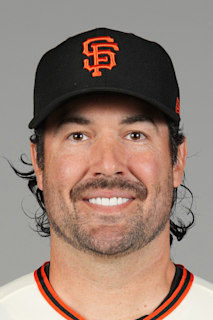
The prediction markets have priced Saturday's White Sox-Giants matchup as a perfect 50-50 proposition, but the underlying numbers reveal two teams traveling different paths to similar mediocrity. Chicago enters Oracle Park averaging 4.51 runs per game while allowing 4.78, a modest offensive edge masking deeper defensive struggles. San Francisco counters with the inverse profile — a stingy 4.53 runs allowed per game paired with an anemic 3.57 runs scored, nearly a full run below their opponents' output.
The White Sox offense has found legitimate power threats in Munetaka Murakami and Miguel Vargas, who anchor the lineup with OPS marks of .922 and .856 respectively. Murakami's 17 home runs through 51 games represent elite power production, while his .380 on-base percentage demonstrates patience that complements the pop. Vargas provides secondary thunder at 11 homers with a more contact-oriented .243/.370/.486 line. The supporting cast thins quickly — Randal Grichuk's .821 OPS comes with a small sample caveat at just 58 plate appearances, while shortstop Colson Montgomery's .797 mark reflects solid production from a premium defensive position.
San Francisco's offensive picture tells a different story entirely. Daniel Susac leads qualified hitters with a .956 OPS, but his 45 plate appearances represent a tiny sample that demands regression expectations. Casey Schmitt provides the Giants' most reliable production at .291/.331/.533 with 10 home runs, while Luis Arraez contributes his trademark contact skills at .323/.360/.431. The problem becomes clear in the aggregate — San Francisco's 3.57 runs per game ranks among the league's most anemic attacks, creating constant pressure on their pitching staff to deliver near-perfect performances.
The mound matchup features two left-handers with contrasting profiles but similar underlying concerns. Noah Schultz brings a 4.93 ERA and concerning 1.30 WHIP through seven starts for Chicago, with his 5.45 BB/9 walk rate highlighting command issues that have plagued his early-season work. The strikeout rate remains solid at 8.31 K/9, but the free passes create constant traffic. Robbie Ray counters with a 4.28 ERA and identical 1.32 WHIP across 10 starts, though his profile skews toward different weaknesses. Ray's 1.98 HR/9 represents significant home run vulnerability, while his improved 3.62 BB/9 shows better command than his Chicago counterpart.
The broader pitching context favors San Francisco's staff-wide numbers. The Giants have posted a 4.23 ERA with superior command at 3.78 BB/9, compared to Chicago's 4.48 ERA and 4.15 BB/9. Both teams generate similar strikeout rates around 8.0 K/9, but San Francisco's ability to limit free passes provides a meaningful edge in close games. The White Sox staff has allowed 57 home runs compared to the Giants' 51, though the difference proves marginal across similar innings totals.
The market's perfect 50-50 pricing appears justified given the contrasting team profiles that ultimately balance toward similar expected outcomes. Chicago's superior offense faces San Francisco's better pitching, while the Giants' run-prevention advantage must overcome their offensive limitations. With both Polymarket and Kalshi aligned at exactly 50 cents for each side, the prediction markets see no edge worth exploiting in either direction — a rare instance where the underlying numbers support the pricing rather than revealing hidden value.
If you or someone you know has a gambling problem, call 1-800-GAMBLER. Must be 21+. Market prices sourced from prediction markets (Polymarket, Kalshi), not traditional sportsbooks.