


The Cincinnati Reds enter Saturday's matinee riding an 8-2 surge over their last 10 games, pushing them to 18-9 and first place in their division. Meanwhile, Detroit sits at .500 through 28 games, matching Cincinnati's 5-5 recent form but lacking the early-season momentum. The market reflects this gap, pricing Cincinnati as a slight 50.4¢ home favorite against Detroit's 49.0¢ implied probability.
Cincinnati's offensive catalyst has been third baseman Sal Stewart, who leads all qualified hitters in this matchup with a 1.062 OPS through 84 plate appearances. Stewart's seven home runs and 17 RBIs anchor a .300/.405/.657 slash line that's carried the Reds' attack. Shortstop Elly De La Cruz adds complementary power with six homers and a .903 OPS, though his 27 strikeouts in 88 plate appearances signal swing-and-miss concerns. The recent headlines confirm Eugenio Suárez's placement on the 10-day IL with an oblique strain, removing a .747 OPS bat from Cincinnati's lineup but creating more opportunities for Stewart to drive in runs.
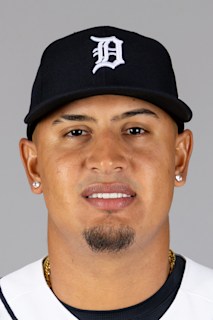
Detroit's offense centers around shortstop Kevin McGonigle's breakout start — a .306/.412/.486 line good for an .898 OPS through 85 plate appearances. Catcher Dillon Dingler provides surprising pop with four homers in just 66 plate appearances, posting a .536 slugging percentage that's elevated his OPS to .895. Second baseman Colt Keith contributes steady contact at .317/.349/.433, though his lack of power limits his ceiling. The Tigers' offensive depth appears thinner than Cincinnati's, with Riley Greene struggling to a .726 OPS despite 81 plate appearances.
The pitching matchup features two right-handers working through small sample caveats. Detroit's Keider Montero brings a 3.31 ERA across 16.3 innings through three starts, supported by excellent control with just a 1.10 BB/9 rate and zero home runs allowed. His 8.27 K/9 suggests swing-and-miss stuff, though the limited innings make these rates volatile. Cincinnati counters with Rhett Lowder, who's logged 23.0 innings across four starts with a 3.52 ERA. Lowder's profile shows concerning control issues — a 2.74 BB/9 rate that's elevated his WHIP to 1.13 — while his 5.87 K/9 suggests less strikeout upside than Montero.
The staff-wide pitching numbers reveal similar ERA profiles — Detroit at 3.46 and Cincinnati at 3.48 — but different approaches. Detroit's staff strikes out more batters (8.07 K/9 vs. 7.61 K/9) while allowing fewer walks (3.67 BB/9 vs. 4.38 BB/9), creating a cleaner WHIP advantage at 1.25 versus Cincinnati's 1.33. The Reds have surrendered more home runs (17 vs. 12), translating to a higher HR/9 rate that could prove costly against Detroit's power threats.
The market's near-even pricing at 50.4¢ for Cincinnati reflects the underlying statistical picture accurately. While the Reds carry superior recent form and home-field advantage, Detroit's pitching edge — both in the starter matchup and staff-wide metrics — narrows the gap considerably. Montero's control profile and zero home runs allowed through three starts suggest upside against a Cincinnati lineup that's lost Suárez to injury. The 2¢ dispersion between Polymarket (52¢) and Kalshi (50¢) on Cincinnati indicates minor market disagreement but nothing significant enough to exploit.
This shapes up as a competitive afternoon game where small-sample pitching performances will likely determine the outcome, making the market's cautious approach the appropriate read.
If you or someone you know has a gambling problem, call 1-800-GAMBLER. Must be 21+. Market prices sourced from prediction markets (Polymarket, Kalshi), not traditional sportsbooks.