

The Rockies and Phillies enter Friday's matchup as two of the National League's most disappointing teams through the season's first six weeks. Colorado sits at 14-23 (.378) while Philadelphia checks in at 16-22 (.421), with both clubs posting negative run differentials despite preseason expectations. The market prices Philadelphia as a 62¢ favorite at Citizens Bank Park, but the underlying numbers suggest this spread may be generous given how similarly both teams have performed.
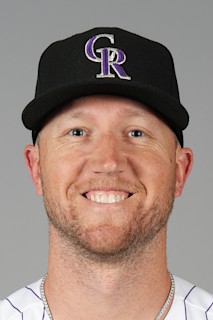
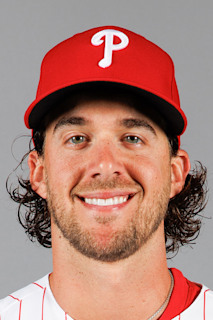
Kyle Freeland takes the mound for Colorado carrying a 5.04 ERA and 1.36 WHIP through five starts and 25.0 innings. The veteran left-hander has struck out 21.6% of batters faced while walking 7.2%, generating 8.64 K/9 against 2.88 BB/9. Aaron Nola counters for Philadelphia with a nearly identical 5.06 ERA across seven starts and 37.3 innings, though his peripherals show more swing-and-miss upside at 24.8% strikeout rate and 9.64 K/9. Nola's control has been shakier with 8.1% walks and 3.13 BB/9, while both starters have surrendered home runs at concerning clips — Freeland at 1.44 HR/9 and Nola at 1.45 HR/9.
The offensive picture tilts slightly toward Colorado despite their inferior record. The Rockies plate 4.41 runs per game compared to Philadelphia's 3.92, led by Mickey Moniak's breakout campaign. Moniak has slashed .315/.364/.694 with 11 home runs across 121 plate appearances, providing the type of power production Colorado desperately needed. Jake McCarthy adds depth at .286/.354/.514 through 82 plate appearances, giving the Rockies two legitimate threats in their outfield mix.
Philadelphia's lineup centers around Bryce Harper's steady .282/.380/.549 line with nine homers through 166 plate appearances. Kyle Schwarber continues his all-or-nothing approach at .214/.349/.545, walking at a strong 14.9% clip while striking out 32.0% of the time. His 13 home runs in 175 plate appearances keep him dangerous despite the low average. Brandon Marsh has been a pleasant surprise at .333/.368/.500, though his four home runs across 136 plate appearances suggest limited power upside.
Both pitching staffs have struggled mightily in 2026. Colorado's staff ERA sits at 4.70 with a 1.41 WHIP, allowing 5.22 runs per game that ranks among the worst marks in baseball. Philadelphia fares marginally better at 4.76 ERA and 1.44 WHIP, though their 5.11 runs allowed per game shows similar run-prevention issues. The Phillies generate more strikeouts at 9.63 K/9 compared to Colorado's 7.80, but both staffs have been homer-prone with the Rockies allowing 1.38 HR/9 and Philadelphia 1.05 HR/9.
Recent form favors Philadelphia significantly, as the Phillies have gone 7-3 over their last 10 games while Colorado limps in at 3-7. This momentum shift coincides with interim manager Don Mattingly taking over Philadelphia's dugout, per CBS Sports, though it remains unclear whether the managerial change has directly impacted on-field performance or simply coincided with better execution.
The market's 62¢ pricing on Philadelphia appears reasonable given their superior recent form and home-field advantage, though the gap between these teams is narrower than the records suggest. Colorado's offensive edge and Philadelphia's pitching struggles create enough uncertainty to make this a competitive affair despite the Rockies' poor overall record. Both starters enter with elevated ERAs and home run rates that could lead to a higher-scoring contest than either team's season averages would indicate.
If you or someone you know has a gambling problem, call 1-800-GAMBLER. Must be 21+. Market prices sourced from prediction markets (Polymarket, Kalshi), not traditional sportsbooks.