

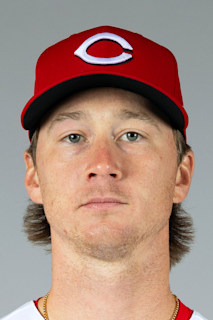
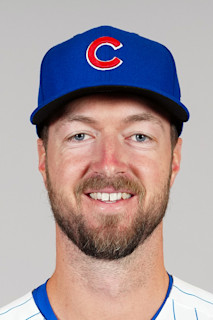
The Chicago Cubs enter Tuesday's matinee riding a seven-game winning streak that has pushed them to 24-12 (.667) while the Cincinnati Reds limp into Wrigley Field at 3-7 over their last 10 games. The market reflects this momentum gap, pricing Chicago as a 60-cent favorite against Cincinnati's 40-cent implied probability.
Chicago's offensive surge has been the story of their hot stretch, averaging 5.36 runs per game through 36 contests. That production advantage becomes stark when measured against Cincinnati's 4.08 RS/G — a gap of nearly 1.3 runs per game that explains much of the Cubs' superior record. Seiya Suzuki has anchored the Cubs' attack with a .947 OPS across 101 plate appearances, slashing .306/.406/.541 with six home runs. Michael Conforto adds depth from the right side, posting a .956 OPS through 40 plate appearances despite a smaller sample size.
The Reds counter with Elly De La Cruz's dynamic presence at shortstop, where he's compiled a .880 OPS through 159 plate appearances while contributing 10 home runs and 25 RBI. Nathaniel Lowe provides steady production at first base (.960 OPS, 6 HR, 16 RBI), while JJ Bleday's limited 29-plate-appearance sample shows explosive potential with a 1.247 OPS anchored by four home runs.
The pitching matchup favors Chicago significantly. Colin Rea brings a 4.41 ERA and 1.32 WHIP across 32.7 innings, striking out 21.1% of batters while limiting walks to 6.3%. His 8.26 K/9 rate suggests swing-and-miss stuff that could neutralize Cincinnati's contact-oriented approach. Brady Singer counters with concerning peripherals: a 5.57 ERA and bloated 1.73 WHIP through 32.3 innings. Singer's 13.1% strikeout rate ranks as particularly troubling, offering little margin for error against a Cubs lineup that has shown consistent production depth.
The broader pitching picture reinforces Chicago's advantage. The Cubs' staff has posted a 3.83 ERA with a 1.17 WHIP, striking out 8.36 batters per nine innings while limiting walks to 2.96 per nine. Cincinnati's staff counters with a 4.48 ERA and 1.50 WHIP, walking 4.84 batters per nine innings — nearly two full walks more than Chicago allows. That control differential becomes magnified in close games where baserunners matter most.
Recent developments compound Cincinnati's challenges. Per MLB.com, Reds closer Emilio Pagán suffered a left hamstring injury and is likely headed to the injured list, creating uncertainty in late-inning situations. The Cubs, meanwhile, have won 13 straight games at Wrigley Field according to MLB.com, suggesting genuine home-field momentum beyond simple record-based metrics.
The 60-40 pricing appears well-calibrated given the underlying numbers. Chicago's offensive edge (5.36 RS/G vs. 4.08), defensive advantage (4.14 RA/G vs. 4.75), and superior recent form (7-3 vs. 3-7) all support their role as home favorites. Singer's struggles provide additional reason to lean toward the Cubs, particularly against a lineup that has shown consistent production across multiple contributors. The market has this one priced correctly.
If you or someone you know has a gambling problem, call 1-800-GAMBLER. Must be 21+. Market prices sourced from prediction markets (Polymarket, Kalshi), not traditional sportsbooks.