


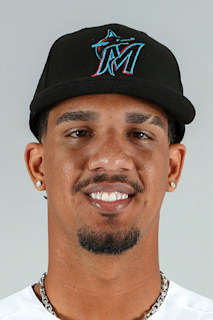
Miami enters Tuesday's matchup with a clear pitching advantage, posting a 4.05 ERA across 313.7 innings compared to Baltimore's struggling 4.92 mark through 313 frames. The Marlins have allowed just 0.86 home runs per nine innings this season — nearly half Baltimore's 1.29 rate — while maintaining similar strikeout production at 8.61 K/9 versus the Orioles' 8.54.
The starting pitching matchup amplifies this disparity. Eury Pérez brings a 4.46 ERA and elite strikeout upside at 9.66 K/9 through seven starts, though his 3.96 BB/9 and 10.1% walk rate signal command concerns that Baltimore could exploit. Brandon Young counters with a 4.29 ERA across three starts, but his peripherals paint a shakier picture — a bloated 1.57 WHIP and concerning 1.84 HR/9 rate through just 14.7 innings. Young's small sample carries obvious volatility, but the early returns suggest Miami's lineup could find success against Baltimore's right-hander.
Baltimore's offensive profile centers on patience and contact quality from their top tier. Taylor Ward leads the charge with a .429 on-base percentage across 161 plate appearances, drawing 31 walks while posting an .843 OPS. Adley Rutschman provides the power element at .873 OPS with four home runs, while Leody Taveras offers a balanced .808 mark with solid plate discipline. The Orioles are scoring 4.54 runs per game despite their pitching struggles, suggesting enough offensive capability to stay competitive.
Miami's lineup presents a more top-heavy construction, led by Xavier Edwards' .887 OPS and impressive .333/.425/.462 slash line through 154 plate appearances. Otto Lopez matches Edwards' .333 average while contributing four home runs, and Liam Hicks provides legitimate power at .947 OPS with eight long balls through 121 plate appearances. The small-sample standouts — Esteury Ruiz's 1.000 OPS and Griffin Conine's .951 mark — add intrigue but carry obvious regression risk given their limited exposure.
The run-prevention numbers tell the story of two teams heading in different directions. Miami's 4.36 runs allowed per game represents a significant improvement over Baltimore's 5.49 mark, creating a nearly full-run daily advantage for the home side. Baltimore's -33 run differential through 35 games reflects their pitching woes, while Miami's -4 mark suggests a more balanced, if unspectacular, profile. Both teams enter on cold streaks — Baltimore at 4-6 over their last 10 and Miami at 3-7 — but the underlying metrics favor the Marlins' recent struggles as more variance-driven than structural.
The market's 54.5¢ pricing on Miami reflects appropriate skepticism given both teams' sub-.460 winning percentages, but the pitching differential suggests the Marlins offer value at those odds. Baltimore's road struggles compound their pitching concerns, while Miami's home environment could amplify their staff's effectiveness. The prediction markets show rare agreement with minimal dispersion between Polymarket and Kalshi, indicating consensus around Miami as a modest favorite despite both teams' early-season disappointments.
If you or someone you know has a gambling problem, call 1-800-GAMBLER. Must be 21+. Market prices sourced from prediction markets (Polymarket, Kalshi), not traditional sportsbooks.