

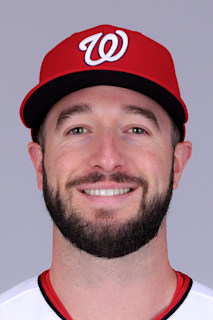

Miles Mikolas enters Thursday's matchup carrying an 11.49 ERA through 15.7 innings — a figure that immediately jumps off the page in a season where the Nationals right-hander has surrendered 20 earned runs across just three starts. His 2.17 WHIP and 3.45 HR/9 paint the picture of a pitcher getting hit hard and often, while his 13.6% strikeout rate suggests limited swing-and-miss ability to escape trouble. Opposing him is Bryan Hudson, whose 2.35 ERA across 7.7 relief innings represents the inverse statistical profile, though the White Sox lefty's workload raises questions about his readiness for a starting assignment.
The hitting environments tell contrasting stories of offensive capability. Washington's lineup features CJ Abrams leading the charge with a 1.151 OPS through 81 plate appearances, powered by six home runs and a .364 average that's backed by legitimate plate discipline — his .469 OBP reflects nine walks against 11 strikeouts. Joey Wiemer adds secondary punch with a 1.010 OPS in limited action, while James Wood provides another left-handed threat at .909 OPS despite a modest .253 average. The Nationals are averaging 5.54 runs per game, a respectable offensive output that should capitalize on Mikolas's recent struggles.
Chicago's offensive picture centers on small-sample production from Everson Pereira, whose .907 OPS includes three home runs in just 30 plate appearances — a pace that screams regression candidate. Munetaka Murakami offers the most established sample at 83 plate appearances, though his .200 average and 28 strikeouts against 17 walks suggest a hitter still adjusting to major league pitching despite six home runs. The White Sox are managing just 4.16 runs per game, ranking them among the weaker offensive units early in 2026.
The pitching matchup heavily favors Chicago despite Hudson's relief background. While his 26.5% strikeout rate and 10.56 K/9 suggest swing-and-miss ability, the transition from relief work to starting presents obvious durability questions — his longest outing this season spans just 7.7 total innings across eight appearances. Still, Hudson's 1.30 WHIP and zero home runs allowed provide a stark contrast to Mikolas's inflated ratios. The broader staff numbers show Chicago with a 4.86 ERA compared to Washington's 6.02 mark, though both teams carry elevated walk rates that could create baserunner traffic.
Recent headlines add context to Chicago's offensive trajectory, with MLB.com noting the White Sox offense's "upswing" following Andrew Benintendi's game-winning homer, while CBS Sports examines whether Murakami's early power surge can sustain itself. The Nationals recalled Riley Cornelio for his MLB debut, per MLB Trade Rumors, though his impact on tonight's game remains unclear.
The market prices Chicago as a 54-cent favorite, reflecting the pitching advantage Hudson holds over Mikolas despite his unconventional role transition. With both Polymarket and Kalshi aligned at identical 54-46 pricing, the consensus view appears to weigh Mikolas's documented struggles more heavily than concerns about Hudson's workload. Given the 7.63-run gap between Mikolas's ERA and Hudson's, plus Chicago's superior staff numbers, the home favorite pricing looks defensible despite the White Sox's offensive limitations.
If you or someone you know has a gambling problem, call 1-800-GAMBLER. Must be 21+. Market prices sourced from prediction markets (Polymarket, Kalshi), not traditional sportsbooks.