


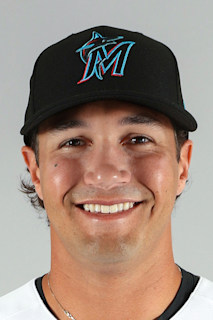
The Mets and Marlins enter Saturday's contest with nearly identical records — New York at 22-28 (.440) and Miami at 24-29 (.453) — but the pitching matchup reveals a fascinating contrast in experience and role. Christian Scott takes the mound for the Mets with just 19.7 innings across five starts in 2026, while Miami counters with Tyler Phillips, who has logged 30.0 innings entirely out of the bullpen across 15 appearances.
Scott's early-season sample shows promise mixed with volatility. The right-hander carries a 4.12 ERA through his five starts, striking out 27.8% of batters faced while walking 13.3%. His 11.44 K/9 rate suggests swing-and-miss stuff, though the 5.49 BB/9 indicates command remains a work in progress. The small sample caveat looms large — 19.7 innings represents roughly four quality starts worth of data, making his current rates subject to significant regression in either direction.
Phillips presents an entirely different profile as a reliever making what appears to be a spot start or bulk appearance. His 1.20 ERA across 30.0 innings looks dominant on the surface, but the context matters: relievers typically face different leverage situations and batter samples than starters. His 8.10 K/9 and 4.80 BB/9 suggest solid but unspectacular stuff, with a 21.1% strikeout rate that trails Scott's early showing. The transition from bullpen work to starter responsibilities — if that's Miami's plan — adds another layer of uncertainty to his projection.
Offensively, both teams have struggled to generate consistent production. The Mets plate 4.08 runs per game while allowing 4.28, creating a modest -0.20 run differential per contest. Juan Soto leads their attack with a .949 OPS through 159 plate appearances, providing the lone elite bat in their lineup. Francisco Alvarez offers secondary production at .710 OPS from the catching spot, but the overall offensive picture remains thin beyond Soto's contributions.
Miami's offense operates at a similar level, scoring 4.28 runs per game against 4.57 allowed for a -0.28 run differential. Xavier Edwards paces their attack with an .856 OPS across 224 plate appearances, while Otto Lopez contributes .854 OPS production from shortstop through 217 trips to the plate. Griffin Conine shows intriguing early returns at .951 OPS, though his 25 plate appearances represent a small sample that demands caution.
The pitching staffs tell contrasting stories when viewed holistically. New York's 3.75 ERA edges Miami's 4.04 mark, while the Mets generate more strikeouts (9.38 K/9 vs 8.73) with slightly better walk control (3.61 BB/9 vs 3.72). Both teams surrender home runs at nearly identical rates — 0.86 HR/9 for New York, 0.88 for Miami — suggesting neither holds a meaningful advantage in preventing extra-base damage.
The market pricing reflects the underlying uncertainty, with both teams sitting at 52¢ and 48¢ implied probability respectively. The tight spread acknowledges that neither club has established clear superiority through 50-plus games, and today's pitching matchup adds layers of unpredictability with Scott's limited sample and Phillips' role transition. The VWAP shows perfect agreement between Polymarket and Kalshi, indicating no meaningful market inefficiency to exploit.
Given the comparable offensive outputs, similar run-prevention profiles, and the question marks surrounding both probable starters, the market's essentially even pricing appears well-calibrated to the available information.
If you or someone you know has a gambling problem, call 1-800-GAMBLER. Must be 21+. Market prices sourced from prediction markets (Polymarket, Kalshi), not traditional sportsbooks.