

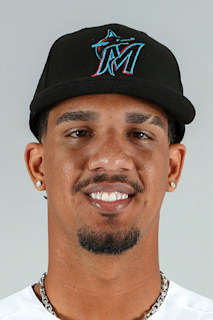
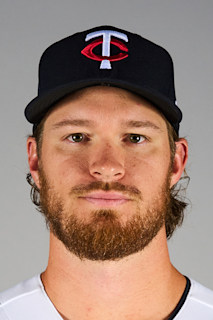
The prediction markets can't separate Miami and Minnesota tonight, with the Marlins priced at 48.3¢ and the Twins at 50.8¢ — essentially a coin flip between two sub-.500 clubs looking to gain ground in what's been a disappointing start to 2026. Both teams enter with identical 41-game samples but contrasting offensive profiles that could determine which side breaks even.
Miami's offense has been quietly efficient at 4.29 runs per game, led by a balanced attack from Xavier Edwards (.322/.409/.477) and Otto Lopez (.344/.373/.512) up the middle. Edwards has been particularly valuable with 22 walks against just 19 strikeouts through 172 plate appearances, providing consistent on-base ability from the two-hole. Catcher Liam Hicks adds legitimate power with nine home runs and a .558 slugging percentage, giving the Marlins multiple ways to manufacture runs. The small-sample caveat applies to Griffin Conine's .951 OPS through just 25 plate appearances, but his early power surge (two homers) adds another potential catalyst.
Minnesota counters with more raw offensive volume at 4.73 runs per game, though the production comes with more volatility. Byron Buxton remains the centerpiece with 13 home runs and a .556 slugging percentage, but his .312 on-base percentage reflects the swing-and-miss profile that's defined his career. Ryan Jeffers has emerged as a steady complementary piece at .298/.403/.519, while Austin Martin's .466 on-base percentage through 116 plate appearances provides the table-setting element this lineup needs. Ryan Kreidler's 1.103 OPS carries a significant small-sample flag with just 18 plate appearances.
The pitching matchup tilts toward Miami's Eury Pérez despite his 5.01 ERA through eight starts. Pérez's 9.80 K/9 and 24.7 strikeout rate demonstrate swing-and-miss stuff that could neutralize Minnesota's power-heavy approach, though his 4.57 BB/9 creates baserunner issues. Bailey Ober brings more command at 3.14 BB/9 but lacks the strikeout upside at 6.70 K/9, making him more vulnerable to Miami's contact-oriented attack. Ober's 4.19 ERA and 1.19 WHIP represent solid but unspectacular numbers that could be tested by Edwards and Lopez's ability to work counts.
The broader staff context favors Miami significantly. The Marlins' 4.06 team ERA sits nearly two-thirds of a run better than Minnesota's 4.72 mark, while their 1.26 WHIP compares favorably to the Twins' 1.40 figure. Minnesota's staff has allowed 41 home runs in 377.7 innings compared to Miami's 32 homers in 348.4 frames — a meaningful gap that could prove decisive in a tight game.
The market's near-even pricing appears justified given the offensive numbers, but it may be undervaluing Miami's pitching edge. The Marlins' superior run prevention at 4.37 runs allowed per game versus Minnesota's 5.02 figure represents the clearest statistical separation between these clubs. With both teams struggling to find consistency — Miami at 4-6 in their last 10, Minnesota at 5-5 — the side with better pitching depth holds the structural advantage in a matchup this close.
If you or someone you know has a gambling problem, call 1-800-GAMBLER. Must be 21+. Market prices sourced from prediction markets (Polymarket, Kalshi), not traditional sportsbooks.