

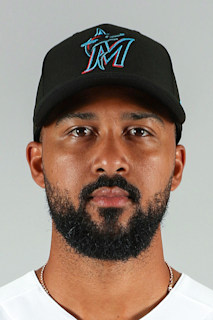

Sandy Alcantara brings a 2.67 ERA through four starts back to Oracle Park, where the Giants have managed just 3.24 runs per game — the lowest offensive output between these clubs through 25 games. Miami enters at 12-13 despite outscoring opponents by two runs, while San Francisco sits 11-14 with a -19 run differential that tells the story of their early-season struggles.
The Marlins offense has found unexpected production from Otto Lopez, who leads the team with a .983 OPS through 80 plate appearances. The second baseman is hitting .347 with three home runs, providing a spark atop the lineup alongside shortstop Xavier Edwards (.347/.417/.493). Griffin Conine offers power potential in limited action — his .951 OPS includes two homers in just 25 plate appearances, though the small sample carries obvious volatility concerns. Catcher Liam Hicks has delivered steady production with 18 RBI and a .533 slugging percentage, giving Miami multiple threats despite their modest 4.48 runs per game.
San Francisco's offensive picture centers on Daniel Susac's remarkable early-season surge. The catcher is hitting .524 with a 1.259 OPS through 22 plate appearances — elite production that screams regression given the microscopic sample. Casey Schmitt provides more established value at third base with a .315 average and .892 OPS across 59 plate appearances, while Willy Adames has contributed three homers despite a .269 average. The Giants' 3.24 runs per game ranks as their primary concern, with Luis Arraez's contact-heavy approach (.319 average, zero homers) emblematic of their power shortage.
Alcantara's return from injury has been encouraging for Miami. The right-hander carries a 0.86 WHIP with 6.53 K/9 and just 1.78 BB/9 across 30.3 innings. His 0.89 HR/9 suggests good command in the early going, though his 19.0% strikeout rate remains below his peak levels. Adrian Houser presents a different profile for San Francisco — his 5.06 ERA and 1.56 WHIP through 16 innings reflect ongoing struggles with command. Houser's 2.81 BB/9 and 13.5% strikeout rate create traffic on the bases, while his 0.56 HR/9 offers the lone bright spot in his peripheral numbers.
The staff-wide pitching numbers show Miami with a slight edge at 4.11 ERA compared to San Francisco's 4.22 mark. Both teams generate similar strikeout rates — the Marlins at 9.00 K/9 and Giants at 9.21 K/9 — but Miami's superior walk rate (3.81 BB/9 vs. 4.01 BB/9) provides better foundation for consistent innings. The Giants' 1.13 HR/9 compared to Miami's 0.98 HR/9 adds another layer of concern for the home club.
The market has this essentially even at 52¢ for Miami and 48¢ for San Francisco, with perfect agreement between Polymarket and Kalshi. That pricing feels generous to the Giants given their offensive struggles and Houser's early-season command issues. Alcantara's steady return combined with Miami's more balanced offensive attack suggests value on the road favorite. The Marlins' ability to score 4.48 runs per game against a Giants staff allowing 4.22 runs per game creates a cleaner path to victory than San Francisco's anemic offense facing Alcantara's renewed form.
If you or someone you know has a gambling problem, call 1-800-GAMBLER. Must be 21+. Market prices sourced from prediction markets (Polymarket, Kalshi), not traditional sportsbooks.