

The Mariners carry a 56¢ implied probability into Minneapolis despite sitting just one game over .500, while the struggling Twins check in at 44¢ after dropping nine of their last ten games. Seattle's 3.28 staff ERA sits nearly a full run better than Minnesota's 4.08 mark through the season's first month, setting up a classic pitching-versus-hitting dynamic at Target Field.
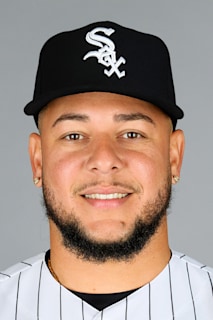
Luis Castillo takes the mound for Seattle with a 5.40 ERA through four starts and 18.3 innings, numbers that don't immediately inspire confidence but mask some encouraging peripherals. The right-hander is striking out 19.3% of batters faced while maintaining solid control with just an 8.0% walk rate. His 0.49 HR/9 suggests he's keeping the ball in the yard effectively, though a 1.80 WHIP indicates traffic on the basepaths has been an issue early in 2026.
The Twins counter with an announced starter who has no 2026 season statistics on file yet, creating uncertainty around their pitching approach. Minnesota's staff-wide numbers paint a concerning picture — their 4.08 ERA ranks among the higher marks in the early season, supported by troubling peripherals including a 3.52 BB/9 walk rate that's nearly doubled Seattle's 2.17 mark. The Twins are allowing baserunners at a 1.36 WHIP clip while striking out just 8.25 batters per nine innings.
Seattle's offensive attack has been inconsistent but shows flashes of power potential. Luke Raley leads the charge with a .971 OPS through 68 plate appearances, launching four home runs while posting a robust .603 slugging percentage. Brendan Donovan provides balance from the left side with a .955 OPS built on excellent plate discipline — his .437 on-base percentage reflects strong selectivity in a small sample of 71 plate appearances. Randy Arozarena brings veteran presence with a .782 OPS across 89 trips to the plate, though his power output remains limited with just one home run to date.
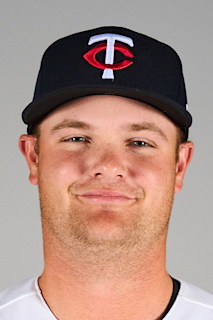
Minnesota's lineup features intriguing pieces but operates in smaller sample sizes that warrant caution. Austin Martin stands out with a .950 OPS through 56 plate appearances, combining a .325 average with outstanding patience reflected in his .500 on-base percentage. Ryan Kreidler's .953 OPS jumps off the page, but it comes across just 14 plate appearances anchored by two home runs — a classic small-sample caveat situation. Tristan Gray contributes from the left side with an .880 OPS and solid power production, while Trevor Larnach adds depth with an .869 mark built on strong walk rates.
The run-scoring context tells a clear story about each team's trajectory. Seattle averages 4.07 runs per game while allowing 3.86, creating a modest but sustainable +0.21 run differential per contest. Minnesota sits dead even at 4.71 runs scored and allowed per game, but their recent form suggests deeper issues — that 1-9 record over the last ten games coincides with their pitching staff's struggles to limit traffic and prevent crooked numbers.
The market's 56¢ pricing on Seattle appears well-calibrated given the pitching disparity and Minnesota's recent slide. The Mariners' staff advantage becomes more pronounced when considering the Twins' unknown starter situation, while Seattle's more established offensive contributors provide a slight edge over Minnesota's smaller-sample performers. With both Polymarket and Kalshi aligned at identical pricing and no meaningful dispersion, the market consensus reflects the underlying numbers accurately — Seattle's pitching depth and Minnesota's recent struggles justify the road favorite positioning.
If you or someone you know has a gambling problem, call 1-800-GAMBLER. Must be 21+. Market prices sourced from prediction markets (Polymarket, Kalshi), not traditional sportsbooks.