

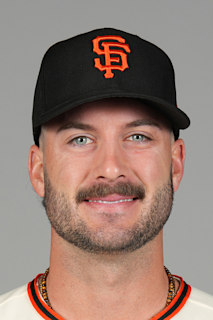
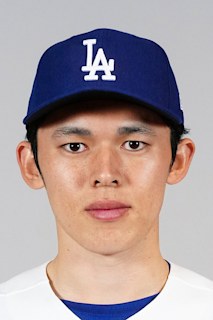
The Los Angeles Dodgers enter Monday's matinee as heavy 62¢ favorites against a San Francisco Giants squad that has managed just three wins over their last ten games. With the Giants sitting 8 games under .500 at 16-23 and the Dodgers cruising at 24-16, the season records tell a stark tale — but the pitching matchup adds another layer of intrigue.
Trevor McDonald makes his second career start for San Francisco, bringing a microscopic 1.29 ERA and 0.29 WHIP through seven innings of work. The right-hander struck out eight batters without issuing a walk in his debut, posting a dominant 10.29 K/9 rate. However, the small sample caveat looms large — one start provides little predictive value, and McDonald's 1.29 HR/9 suggests some regression may be coming. On the other side, Roki Sasaki has struggled through six starts for Los Angeles, carrying a bloated 5.96 ERA and 1.67 WHIP across 28.7 innings. The Japanese import has walked 15 batters while striking out 26, producing concerning 4.71 BB/9 and 2.51 HR/9 rates that have undermined his strikeout ability.
The offensive disparity between these clubs is substantial. Los Angeles leads the season series in nearly every meaningful category, averaging 5.08 runs per game compared to San Francisco's anemic 3.21 mark. The Dodgers' lineup depth shows in their top-five hitters, led by Andy Pages' .946 OPS through 160 plate appearances and Dalton Rushing's power surge (seven home runs in just 70 PA). Max Muncy continues his patient approach with 20 walks against 36 strikeouts, while Shohei Ohtani has drawn 27 free passes despite a modest .241 average. San Francisco's offense centers around Daniel Susac's small-sample excellence (1.152 OPS in 24 PA) and Casey Schmitt's solid production (.843 OPS, six home runs). Luis Arraez provides contact skills at .310/.342/.386, but the Giants lack the power depth that makes Los Angeles dangerous throughout the order.
The pitching staffs reveal why this run differential exists. Los Angeles has allowed just 3.35 runs per game compared to San Francisco's 4.41 mark — a full run advantage that compounds over a full season. The Dodgers' staff-wide numbers support their success: 3.27 ERA, 1.12 WHIP, and an impressive 9.10 K/9 rate. San Francisco's pitching has been considerably weaker at 4.08 ERA and 1.33 WHIP, though their 8.14 K/9 isn't terrible. The Giants have also allowed more home runs per nine innings (1.01 vs 0.92), contributing to their run-prevention struggles.
Recent headlines add context to Los Angeles' outlook, with Mookie Betts set to return Monday per multiple reports. While Betts doesn't appear in today's probable lineup, his activation provides depth and veteran presence to a Dodgers roster already performing well. The Giants, meanwhile, have dealt with manager Tony Vitello's public criticism of player effort following their recent slide.
The market's 62¢ pricing on Los Angeles appears justified given the underlying numbers. The Dodgers hold meaningful advantages in both run scoring (5.08 vs 3.21 RS/G) and run prevention (3.35 vs 4.41 RA/G), while the pitching matchup favors neither side definitively — McDonald's tiny sample against Sasaki's season-long struggles creates uncertainty rather than a clear edge. With both Polymarket and Kalshi aligned at identical 62¢ pricing, the market has found consensus on a Dodgers team that simply profiles as the better club across most measurable categories.
If you or someone you know has a gambling problem, call 1-800-GAMBLER. Must be 21+. Market prices sourced from prediction markets (Polymarket, Kalshi), not traditional sportsbooks.