


Atlanta's explosive offense rolls into Denver averaging 5.71 runs per game — the highest mark in these tables — while Colorado's pitching staff has surrendered 4.88 runs per contest through 33 games. That 1.24-run gap in production versus prevention sets up a compelling mismatch at Coors Field, where the market prices the Braves as 61.9¢ favorites.
The Braves' offensive surge has been anchored by Matt Olson's power surge at first base. Through 153 plate appearances, Olson is slashing .293/.373/.639 with 11 home runs and 30 RBI — elite production that has helped fuel Atlanta's +76 run differential. The lineup depth shows in their 5.71 RS/G mark, nearly a run and a half better than Colorado's 4.27 scoring rate. Atlanta has also been red-hot recently, posting an 8-2 record over their last 10 games compared to the Rockies' 4-6 mark in the same span.
Colorado's offensive bright spots include Mickey Moniak, who has emerged as a legitimate threat in left field with a .319/.363/.670 slash line through 102 plate appearances, including 9 home runs. Hunter Goodman has provided solid production behind the plate at .250/.326/.543 with 9 homers of his own. However, the Rockies' 4.27 RS/G pales in comparison to Atlanta's firepower, creating a significant offensive gap that Colorado's pitching will need to overcome.
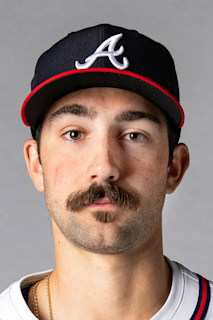
The pitching matchup presents uncertainty on Atlanta's side, as Spencer Strider is announced but carries no 2026 season statistics. The Braves' staff aggregate tells a strong story regardless — their 3.00 ERA leads this comparison by nearly a run and a half over Colorado's 4.42 mark. Atlanta's pitching has allowed just 3.47 runs per game while striking out 8.66 batters per nine innings, showcasing both run prevention and swing-and-miss ability.
Kyle Freeland takes the mound for Colorado with a 3.48 ERA through 20.7 innings across four starts. The left-hander has posted solid peripherals with a 7.40 K/9 rate and 2.18 BB/9, though he's working behind a staff that has struggled collectively. The Rockies' pitching unit has allowed 1.38 home runs per nine innings compared to Atlanta's 0.92 mark, a concerning trend given the offensive firepower they'll face.
Recent headlines add context to Atlanta's momentum, with Chris Sale's dominant 11-strikeout performance highlighting the Braves' pitching depth, per MLB.com. However, Ronald Acuña Jr.'s early exit with hamstring tightness per ESPN bears monitoring, though the extent of any absence remains unclear from the available information.
The market's 61.9¢ pricing on Atlanta appears well-calibrated given the underlying numbers. The Braves hold advantages in both run scoring (5.71 vs 4.27 RS/G) and run prevention (3.47 vs 4.88 RA/G), creating a two-way edge that justifies their favorite status. Colorado's 38.3¢ pricing reflects their 13-20 record and -20 run differential — numbers that paint a clear picture of a team struggling on both sides of the ball. The data supports the market's assessment without revealing obvious value on either side.
If you or someone you know has a gambling problem, call 1-800-GAMBLER. Must be 21+. Market prices sourced from prediction markets (Polymarket, Kalshi), not traditional sportsbooks.