


The Braves arrive at Dodger Stadium with the superior offensive profile, averaging 5.49 runs per game compared to the Dodgers' 5.24, though both teams have built impressive early-season records through strong run prevention. Atlanta sits at 26-13 (.667) while Los Angeles stands at 24-14 (.632), with the visiting Braves carrying a slight edge in run differential despite playing one more game.
Atlanta's lineup has been the more productive unit through 39 games, outscoring their hosts by a quarter-run per contest. The Braves have posted 214 total runs against the Dodgers' 199, translating to that 5.49 RS/G mark that ranks among the better offensive outputs in the early going. However, recent form tells a different story — Atlanta has managed just a 6-4 record over their last 10 games (.600) while the Dodgers have struggled to 5-5 (.500), suggesting both clubs have cooled from their torrid April paces.
The Dodgers counter with superior individual production from their available hitters. Dalton Rushing leads the way with a 1.124 OPS through 65 plate appearances, posting a .328/.400/.724 slash line with seven home runs and 17 RBI. Andy Pages has been nearly as productive with a .925 OPS across 152 plate appearances, hitting .329 with eight homers and 33 RBI. Max Muncy rounds out the top trio at .921 OPS, contributing nine home runs despite a modest .279 average. Shohei Ohtani sits at .822 OPS through 167 plate appearances, hitting .248 but drawing 27 walks against 38 strikeouts.
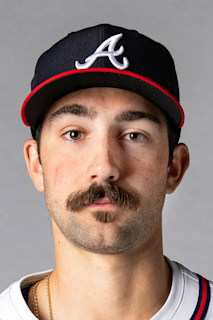
The pitching matchup presents an intriguing contrast between known and unknown quantities. Spencer Strider takes the ball for Atlanta coming off a concerning debut — 8.11 ERA and 2.70 WHIP across 3.3 innings in his lone 2026 start. The right-hander struck out 31.6% of batters faced but walked 26.3%, creating baserunners at an unsustainable clip. That small sample carries obvious volatility, but the control issues represent a clear concern against a Dodgers lineup that has shown patience at the plate.
Blake Snell draws the assignment for Los Angeles in what will be his 2026 debut, per recent reports indicating the left-hander will be reinstated from the injured list. Without season statistics to evaluate, the Dodgers' pitching case rests on their staff-wide numbers — a 3.10 ERA that nearly matches Atlanta's 3.11 mark. The home club has been marginally more efficient, posting a 1.10 WHIP compared to the Braves' 1.17, while striking out batters at a 9.11 K/9 rate against Atlanta's 8.95. The Dodgers have also limited home runs more effectively, allowing 0.92 HR/9 compared to Atlanta's 1.02.
Both teams have built their early success on elite run prevention, with the Dodgers holding a slight edge at 3.16 RA/G compared to Atlanta's 3.51. That six-tenths difference in runs allowed per game helps explain Los Angeles' superior run differential of +2.08 per contest versus Atlanta's +1.97, despite the Braves' offensive advantage. The pitching staffs have performed at nearly identical levels by ERA, but the Dodgers' better control (2.91 BB/9 vs. 3.43) and home run suppression create a meaningful gap in run prevention.
The market has installed the Dodgers as moderate home favorites at 60.5¢ implied probability, with minimal dispersion between Polymarket (62¢) and Kalshi (60¢). That pricing appears to weight home-field advantage and Snell's return over Atlanta's superior offensive numbers and Strider's early-season struggles. The Braves' 39.8¢ pricing looks generous given their run-scoring edge and the uncertainty surrounding Snell's form after his shoulder issue. Atlanta's offensive consistency provides a cleaner path to value than betting on an unknown starter's debut performance.
If you or someone you know has a gambling problem, call 1-800-GAMBLER. Must be 21+. Market prices sourced from prediction markets (Polymarket, Kalshi), not traditional sportsbooks.