


The prediction markets have priced this Angels-Royals matchup as a pure coin flip at 50¢ each side, but the underlying numbers suggest two franchises heading in opposite directions. Kansas City enters with a brutal 1-9 record over their last 10 games and an overall 8-17 mark that ranks among the worst starts in franchise history, while Los Angeles sits at 12-14 despite their own recent struggles at 4-6 in the last 10.
The offensive disparity tells the story of these early-season trajectories. The Angels are averaging 4.85 runs per game behind a lineup anchored by Mike Trout's elite production — the superstar is slashing .236/.415/.569 with 7 home runs through 94 plate appearances, generating a .984 OPS that leads qualified Angels hitters. Adam Frazier has been even better in limited action, posting a .990 OPS through 35 plate appearances with a .333/.471/.519 line, though the small sample caveat applies heavily. Oswald Peraza adds depth at third base with a .919 OPS, while Jorge Soler provides power from the corner with 5 homers and 18 RBI despite a .231 average.
Kansas City's offense has been anemic at 3.52 runs per game, nearly a run and a half below the Angels' output. Kyle Isbel leads their qualified hitters with a .772 OPS, followed closely by Maikel Garcia's .769 mark — both solid but unspectacular numbers that highlight the lack of impact bats in this lineup. The Royals' -35 run differential through 25 games reflects both their offensive struggles and defensive issues, creating a -1.40 runs per game gap that has contributed directly to their poor record.
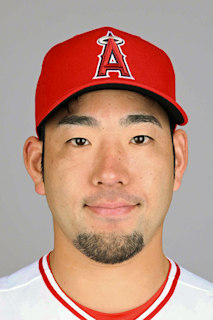
The pitching matchup features two left-handers with contrasting early-season results. Yusei Kikuchi takes the ball for Los Angeles carrying a concerning 7.50 ERA through 18.0 innings across four starts, paired with a bloated 1.89 WHIP that suggests significant command issues. His 9.50 K/9 rate shows the strikeout upside remains intact, but the 5.00 BB/9 walk rate and 1.50 HR/9 home run rate point to major problems locating his arsenal. The 21.3% strikeout rate and 11.2% walk rate confirm the control concerns that have plagued his 2026 campaign.
Noah Cameron counters for Kansas City with much steadier numbers — a 3.50 ERA and 1.17 WHIP through his own 18.0-inning sample, supported by superior command metrics. His 2.50 BB/9 walk rate represents a significant advantage over Kikuchi's wildness, while his 7.50 K/9 and 20.3% strikeout rate suggest adequate swing-and-miss ability. The 1.00 HR/9 home run rate and 6.8% walk rate paint the picture of a pitcher working efficiently in the strike zone, giving the Royals a clear edge in the starting pitching department.
The broader staff numbers show both teams struggling with run prevention — the Angels' 4.18 ERA ranks alongside Kansas City's 4.05 mark, with both clubs posting elevated walk rates that have contributed to their defensive issues. Los Angeles allows 5.15 BB/9 as a staff compared to Kansas City's 4.11 BB/9, suggesting the Angels' command problems extend beyond just Kikuchi's individual struggles.
Given Cameron's superior control metrics against Kikuchi's early-season wildness, combined with the Angels' significantly better offensive production, the market's 50-50 pricing appears to underweight the run-scoring differential between these clubs. Los Angeles should be favored despite their recent 4-6 stretch, as their underlying offensive numbers suggest more sustainable production than Kansas City's league-worst 3.52 runs per game. The pitching edge favors Kansas City, but not enough to overcome a 1.33 runs per game offensive gap that has defined both teams' early-season trajectories.
If you or someone you know has a gambling problem, call 1-800-GAMBLER. Must be 21+. Market prices sourced from prediction markets (Polymarket, Kalshi), not traditional sportsbooks.